The most frequently asked question in the mobile tech world is whether pushing 45W, 65W, or even 120W of power into your smartphone will ruin its battery. When you invest heavily in a flagship device in Pakistan, the last thing you want is for the battery health to plummet to 80% within a year.
Because we have all experienced the intense heat radiating from the back of a fast-charging phone, it is easy to assume that speed equals damage. However, the science of modern power delivery tells a completely different story.
No, legitimate fast charging does not inherently degrade your battery health faster. Modern smartphones and certified chargers use smart protocols like USB Power Delivery (USB-PD) and Programmable Power Supply (PPS) to control power and limit heat. The true cause of rapid battery degradation is excessive heat, often generated by counterfeit chargers or hot environments, not the charging speed itself.
Let’s look past the myths and explore the actual chemistry, the protective technologies in your charger, and why the accessories you buy matter more than the wattage they push.
The Science: How Does Fast Charging Actually Work?
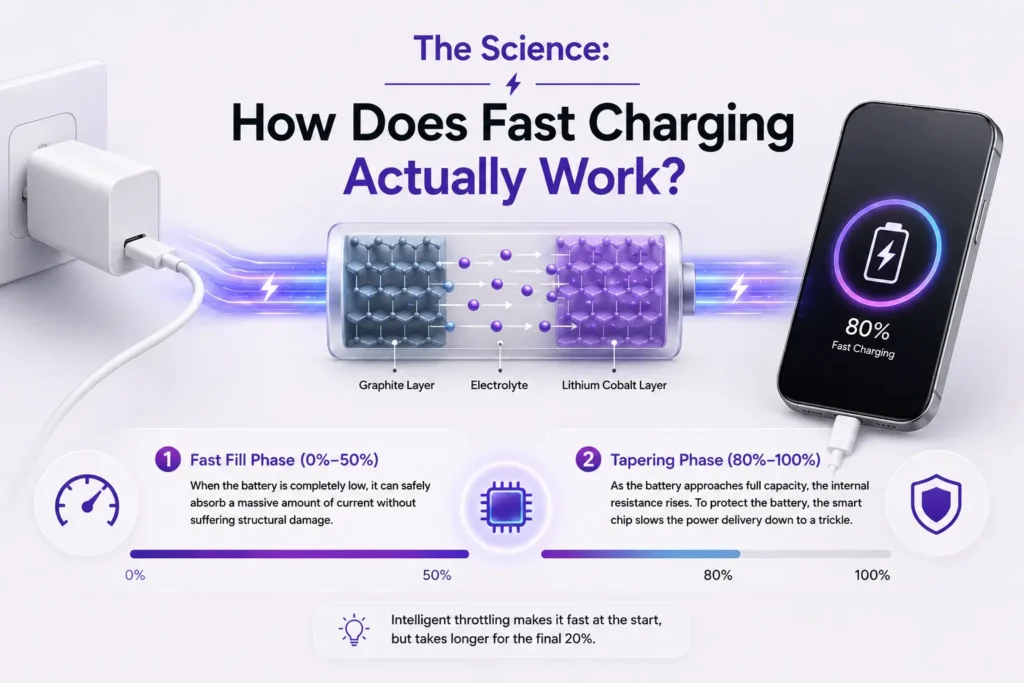
Fast charging does not mean blindly forcing raw electricity into your battery. When lithium ions move from the graphite layer to the lithium cobalt layer through an electrolyte solution, energy is stored.
To safely accelerate this process, modern charging systems use Multi-Stage Charging protocols.
- The Fast Fill Phase (0%–50%): When the battery is completely low, it can safely absorb a massive amount of current without suffering structural damage. This is why your phone reaches 50% in just 30 minutes.
- The Tapering Phase (80%–100%): As the battery approaches full capacity, the internal resistance rises. To protect the battery, the smart chip inside the charger intentionally slows the power delivery down to a trickle.
This intelligent throttling is why your phone charges incredibly fast at the start, but takes much longer to complete the final 20%.
The Real Enemy: Heat, Not Speed
If speed is not the killer, what is? Scientific research universally points to one factor: Heat. Elevated temperature is the single biggest accelerator of battery degradation.
Every time you charge a battery, the internal resistance generates heat. Over hundreds of cycles, this heat causes the anode to develop a “Solid Electrolyte Interphase” (SEI) layer. High heat accelerates the thickening of this SEI layer, which traps lithium ions and permanently reduces your battery’s total capacity.
- The 40°C Danger Zone: Excessive heat (above 40°C) is the battery’s greatest enemy, and every 10°C increase can effectively halve the battery’s lifespan.
- The Local Climate Factor: In Pakistan, charging your phone in an un-air-conditioned room during a 45°C summer afternoon creates compounding thermal stress.
A cool fast charge is mathematically much better for your battery than a hot, slow charge.
How Smart Chargers Protect Your Battery
So, how do you get fast speeds without the destructive heat? You rely on certified hardware protocols.
1. USB Power Delivery (USB-PD) and PPS
Technologies like USB Power Delivery (PD) and Programmable Power Supply (PPS) allow dynamic communication between the charger and the device. A PPS charger adjusts voltage and amperage in microscopic increments every second based on the battery’s real-time condition. If the phone’s thermal sensors detect that the battery is getting too hot, the charger instantly drops the wattage to let the device cool down.
2. Gallium Nitride (GaN) Technology
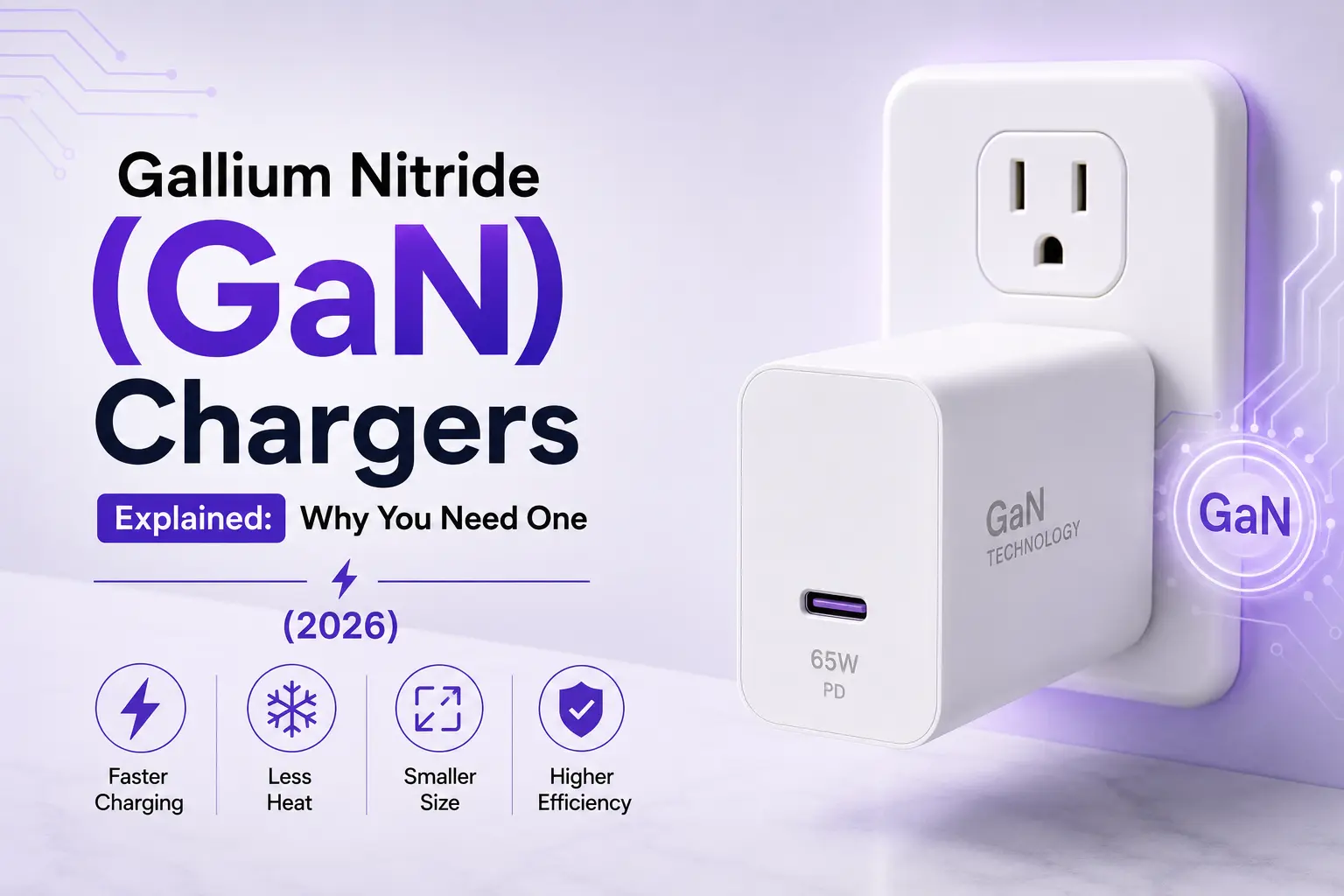
Traditional silicon chargers generate a lot of heat during power conversion. Modern GaN chargers generate significantly less heat and improve charging efficiency. By putting the advanced power management components inside the charging brick itself, the heavy lifting happens outside the phone, keeping the mobile device cool while delivering high wattage.
What the Long-Term Data Actually Says
If you use a certified fast charger, the degradation is remarkably minimal. Published independent tests show that the battery health gap between legitimate fast charging and slow charging after months of daily use is only about 1%.
To put this in perspective:
- Standard fast charging (20W–45W) reduces total cycle life by only 10–20% compared to slow charging.
- This means a battery that would last 4 years on a slow 5W charger will still last a perfectly healthy 3 to 3.5 years on a fast charger.
For the average consumer who upgrades their device every two to three years, the battery degradation from legitimate fast charging is effectively irrelevant.
The True Threat: Cheap Market Chargers
The reason fast charging has a bad reputation in Pakistan is due to the massive influx of counterfeit accessories.
Unregulated, cheap chargers lack the smart protocol controllers (ICs) required to execute the USB-PD digital handshake. They blindly push unstable voltage into your phone, bypassing the Battery Management System (BMS). These cheap adapters cause severe voltage spikes and extreme overheating, cutting battery life in half within a single year. Furthermore, they offer zero protection against local WAPDA power surges, putting your phone’s logic board at imminent risk of frying.
Actionable Tips to Maximize Battery Health
To enjoy the convenience of fast charging without sacrificing longevity, follow these science-backed rules:
- Use Certified Chargers: Only use high-quality, authentic chargers featuring USB-PD and PPS protocols. (Check out the verified options at TechTouch.pk).
- Avoid Gaming While Charging: Playing graphically intense games while fast charging forces the battery to handle heat from both the incoming power and the processor simultaneously.
- Manage Your Temps: Don’t charge your phone in extreme heat, and remove thick cases during charging to allow the heat to vent properly.
- Utilize Charge Limits: Limit your daily charges to 80% if possible, as charging to 100% frequently at high speeds increases chemical strain.
External Research and Further Reading
If you want to dive deeper into the chemistry and engineering of lithium-ion technology, we highly recommend checking out these industry-leading resources:
- Battery University: How to Prolong Lithium-based Batteries – The definitive guide on charge cycles and battery longevity.
- PCMag: Is Fast Charging Actually Killing Your Phone’s Battery? – A great breakdown of mobile ventilation and charging mitigation.
- IEEE Research on Fast Charging Impacts – Detailed scientific journals mapping out SEI layer degradation.
Frequently Asked Questions
Does fast charging overheat the battery?
Fast charging produces marginally more heat than standard charging, but modern smartphones and certified chargers actively monitor and regulate the temperature to prevent it from reaching damaging levels.
Is it bad to fast charge every day?
Regular fast charging is completely safe as long as you are using quality equipment. However, frequently letting your battery drop to 0% and fast-charging it to 100% adds chemical wear.
Can I leave my phone plugged in overnight with a fast charger?
Most modern phones feature smart charging that stops pulling power once the battery hits 100%. However, keeping the battery held at exactly 100% for hours can cause gradual lithium-ion degradation. It is safer to use software features like “Adaptive Charging” which delays the final top-up until right before you wake up.
Source to buy best fast charger in Pakistan : Buy Best Fast Charger in Pakistan Original and reliable