A dead smartphone battery in the middle of a busy university day or client meeting is a universal frustration. If you are sitting in a cafe or your office and the only power source available is a heavy-duty 65W Type-C laptop charger, panic usually sets in. Common sense suggests that plugging a massive 65W laptop brick into a smartphone rated for only 25W will forcefully overload the logic board, overheat the battery, and permanently destroy the device.
At TechTouch.pk, this is one of the most common hardware fears we encounter. However, modern consumer electronics do not operate on raw, uncontrolled electrical flooding. If you are using certified charging gear, the reality of how these devices communicate will completely change how you manage your mobile accessories.
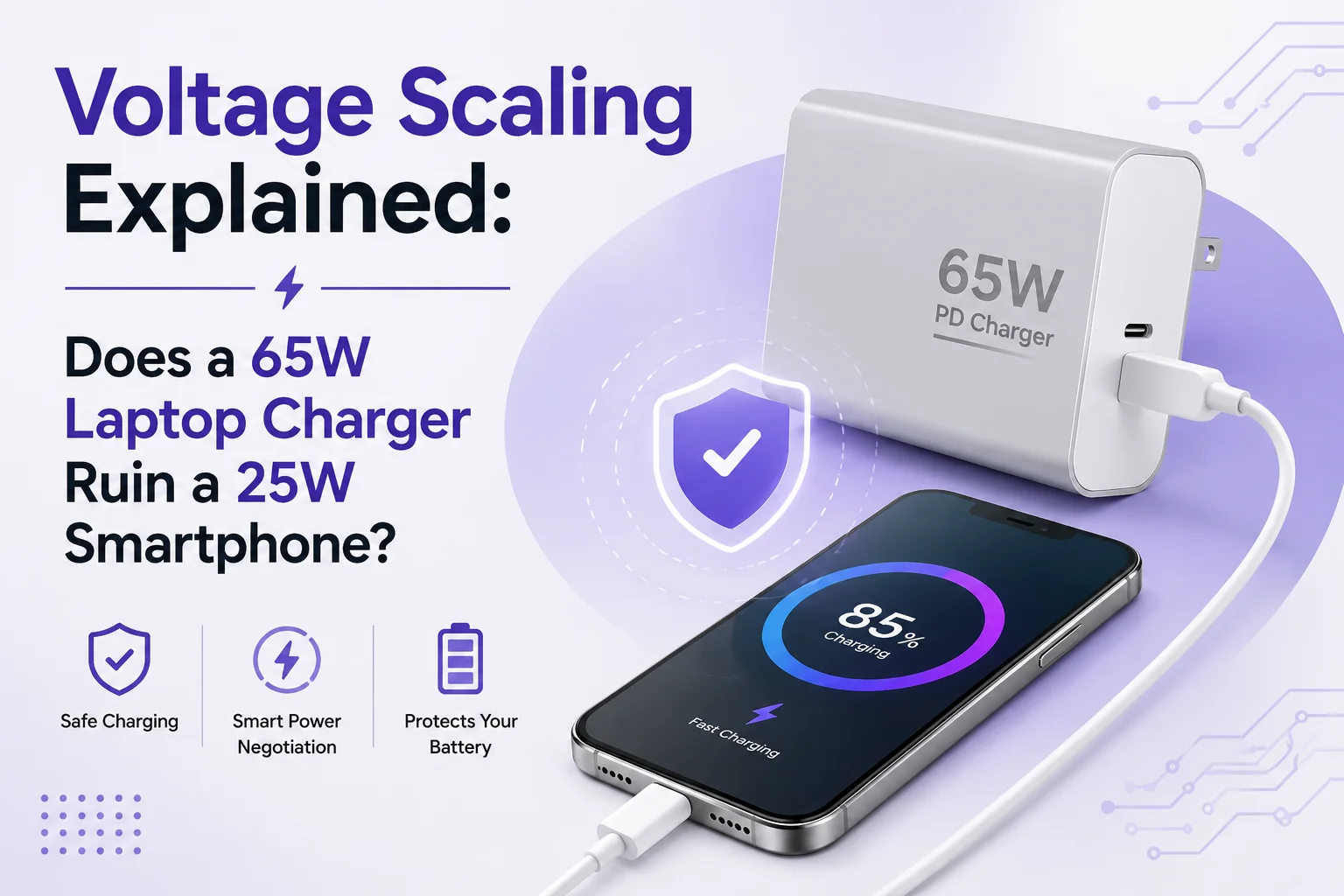
No, a 65W laptop charger will not ruin a 25W smartphone. Modern chargers and smartphones use the USB Power Delivery (USB-PD) protocol to communicate before power is transferred. The smartphone acts as the “boss” and only pulls the exact wattage it is designed to handle. A 65W charger will safely step down its output to 25W, charging your phone at its maximum supported speed without causing any electrical damage or overheating.
The Core Electrical Myth: Chargers Do Not “Push” Power
The fundamental misunderstanding stems from how we visualize electricity. Most people think of a charger like a high-pressure water hose—if you connect a large hose to a small pipe, the pipe will burst.
In reality, electrical wattage measures power flow, but your device controls how much power it takes. A 100W or 65W charger will not force maximum wattage into your phone. Instead, the moment you connect the Type-C cable, the charger and the smartphone engage in a digital “negotiation” through a protocol known as USB Power Delivery (PD). This conversation happens in milliseconds. If your phone says, “I can only accept 25W safely,” the 65W charger instantly caps its output to match that exact request.
The Science of the “Handshake”: USB-PD and PPS
To understand why your smartphone logic board remains safe, we have to look at the specific microchips housed inside premium charging adapters.
1. Standard USB Power Delivery (USB-PD)
Standard PD uses fixed voltage steps, typically operating at 5V, 9V, 15V, and 20V. When you plug your 25W phone into a 65W PD charger, the charger offers its menu of voltages. The phone selects the highest safe combination (usually 9V at roughly 2.77A, equating to 25W) and ignores the higher 15V and 20V lanes meant for laptops.
2. Programmable Power Supply (PPS)
If you own a modern flagship, such as a Samsung Galaxy or Google Pixel, your device likely relies on a newer, highly advanced extension of the PD standard called PPS (Programmable Power Supply).
PPS takes charging safety to the next level by acting as a real-time thermal manager. Instead of relying on rigid, fixed voltage steps, PPS adjusts the voltage dynamically in increments as microscopic as 20mV (millivolts). Furthermore, it talks to your device constantly, adjusting voltage and current every 10 seconds.
- The Result: By delivering only the exact power your battery needs at any given moment, there is less mismatch between the charger’s output and the battery’s input. This drastically reduces wasted energy, meaning your phone stays physically cooler during the fast-charging cycle, ultimately prolonging the battery’s lifespan.
KYT Chargers
Charging Benchmark Comparison Matrix
Here is exactly how a 65W multi-device adapter distributes power based on the hardware it connects to:
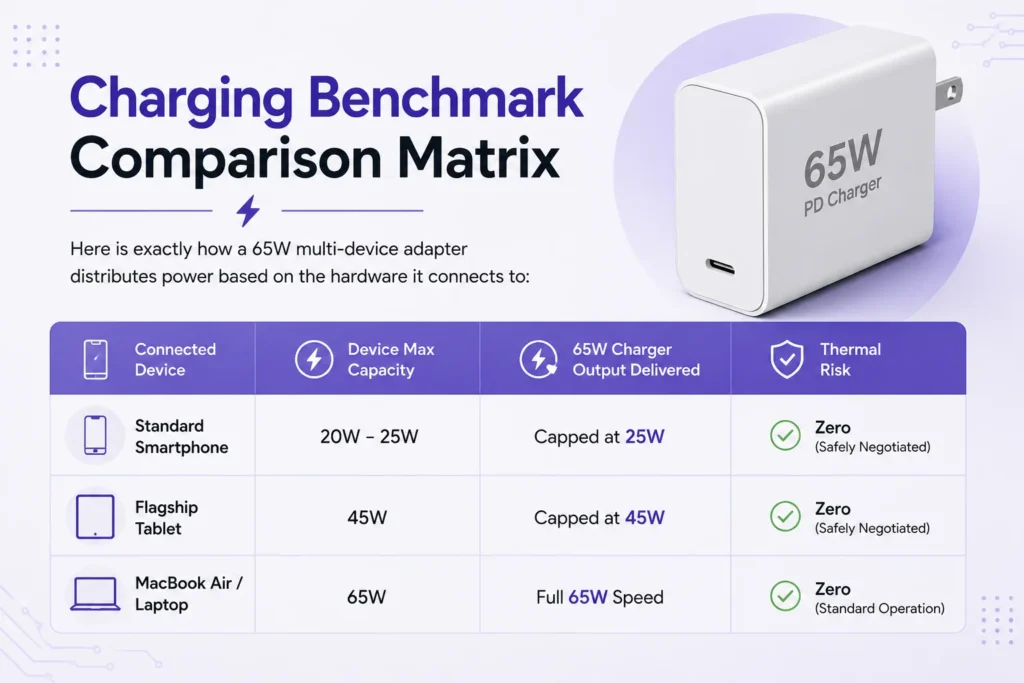
| Connected Device | Device Max Capacity | 65W Charger Output Delivered | Thermal Risk |
| Standard Smartphone | 20W – 25W | Capped at 25W | Zero (Safely Negotiated) |
| Flagship Tablet | 45W | Capped at 45W | Zero (Safely Negotiated) |
| MacBook Air / Laptop | 65W | Full 65W Speed | Zero (Standard Operation) |
GaN Technology and the Pakistani Climate
Understanding voltage scaling is especially critical in regions dealing with extreme environmental factors. During a peak summer afternoon in Punjab or Sindh, ambient room temperatures can easily exceed 40°C. Fast charging inherently generates internal resistance heat.
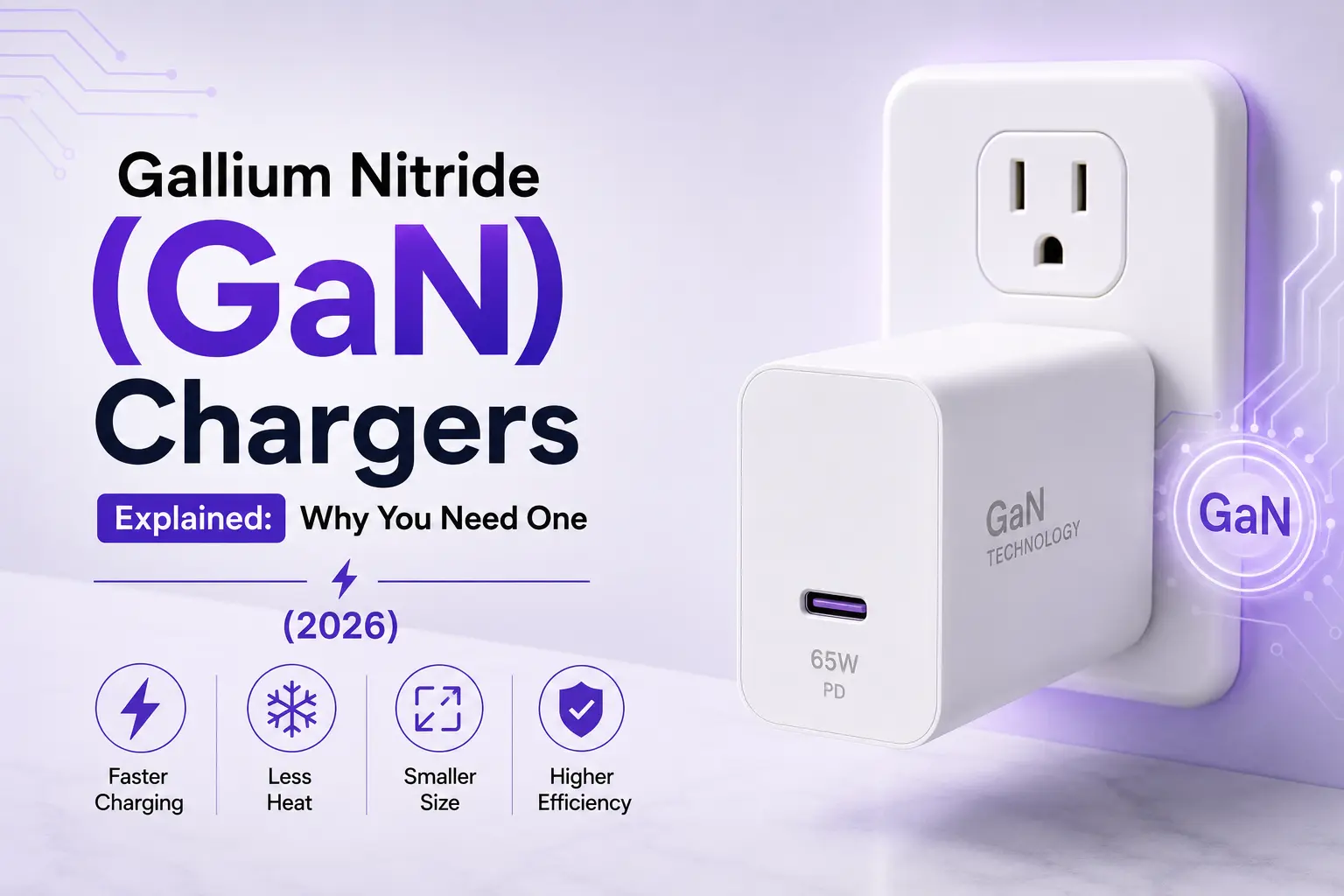
Modern high-wattage chargers mitigate this by utilizing Gallium Nitride (GaN) semiconductors instead of traditional silicon. GaN chargers are smaller, run much cooler, and are significantly more energy-efficient. Because a 65W GaN charger operating at only 25W is essentially “coasting” at less than half its maximum capacity, it generates practically zero heat. This keeps the charging brick ice-cold, adding an extra layer of thermal safety for your equipment.
The WAPDA Defense Mechanism
Our local electrical grid is highly erratic, with load shedding and sudden phase returns causing massive voltage spikes. Premium 65W chargers designed for laptops are engineered with heavy-duty transient voltage suppressors and isolation transformers. When a WAPDA line surge hits your wall socket, these robust internal components act as an electrical shield, absorbing the shock before it can travel down the Type-C cable and fry your smartphone’s power IC.
When Does a High-Wattage Laptop Charger Actually Cause Damage?
The safety net of voltage scaling only exists if the equipment you are using is certified.
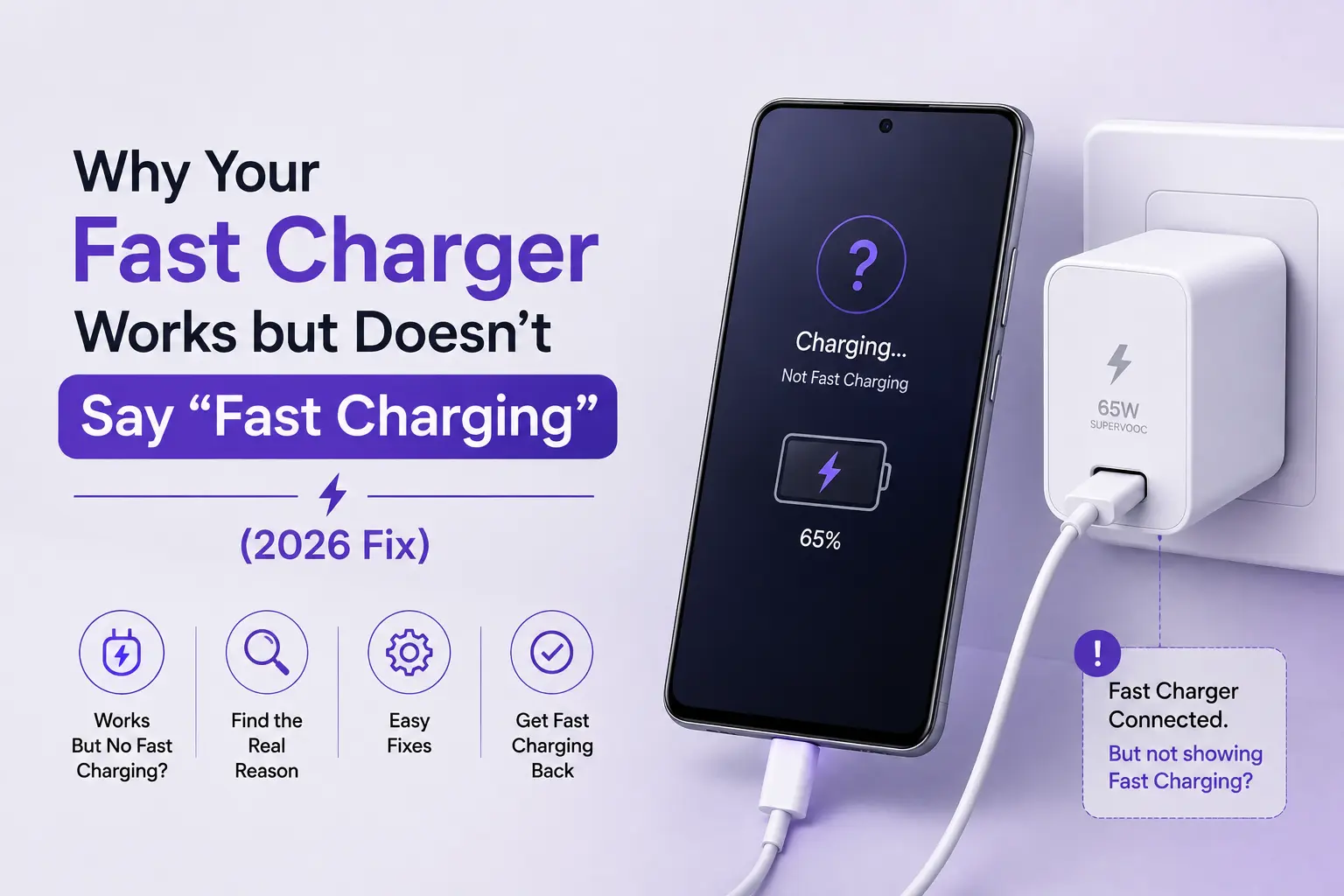
The primary danger arises when you purchase a cheap, counterfeit “65W” charger from an unverified market vendor. Non-certified chargers completely lack proper power negotiation microchips. When you plug one into your phone, it does not negotiate; it blindly dumps unregulated voltage into the Type-C port. This raw electrical flooding bypasses your phone’s safety checks, leading to severe overheating, rapid battery degradation, and motherboard failure.
Additionally, you must pair your adapter with a certified E-Marked Type-C cable. The cable acts as the communication bridge; if the wire is cheap or damaged, the PD handshake will fail, and the charger will automatically throttle down to a painfully slow 5W trickle charge to prevent a fire hazard.
The Final Verdict: Simplify Your Carry
You do not need to carry three different charging bricks in your backpack. Investing in a single, high-quality, certified 65W GaN laptop charger is the smartest tech decision you can make. It will intelligently adapt its output, delivering a safe, rapid 25W charge to your smartphone, a 45W charge to your tablet, and the full 65W to your laptop—all without risking a single degree of unnecessary heat.
Protect your digital investments by ensuring your power accessories are strictly certified for USB-PD and PPS standards.
Read our other Blogs : Xiaomi 67W vs 120W Charger: Is the Upgrade Worth It? , SuperVOOC vs Warp Charge vs FlashCharge: What’s the Difference?